 EN
EN LT
LT DE
DE PL
PL DA
DA SV
SV NB
NB FI
FI IS
IS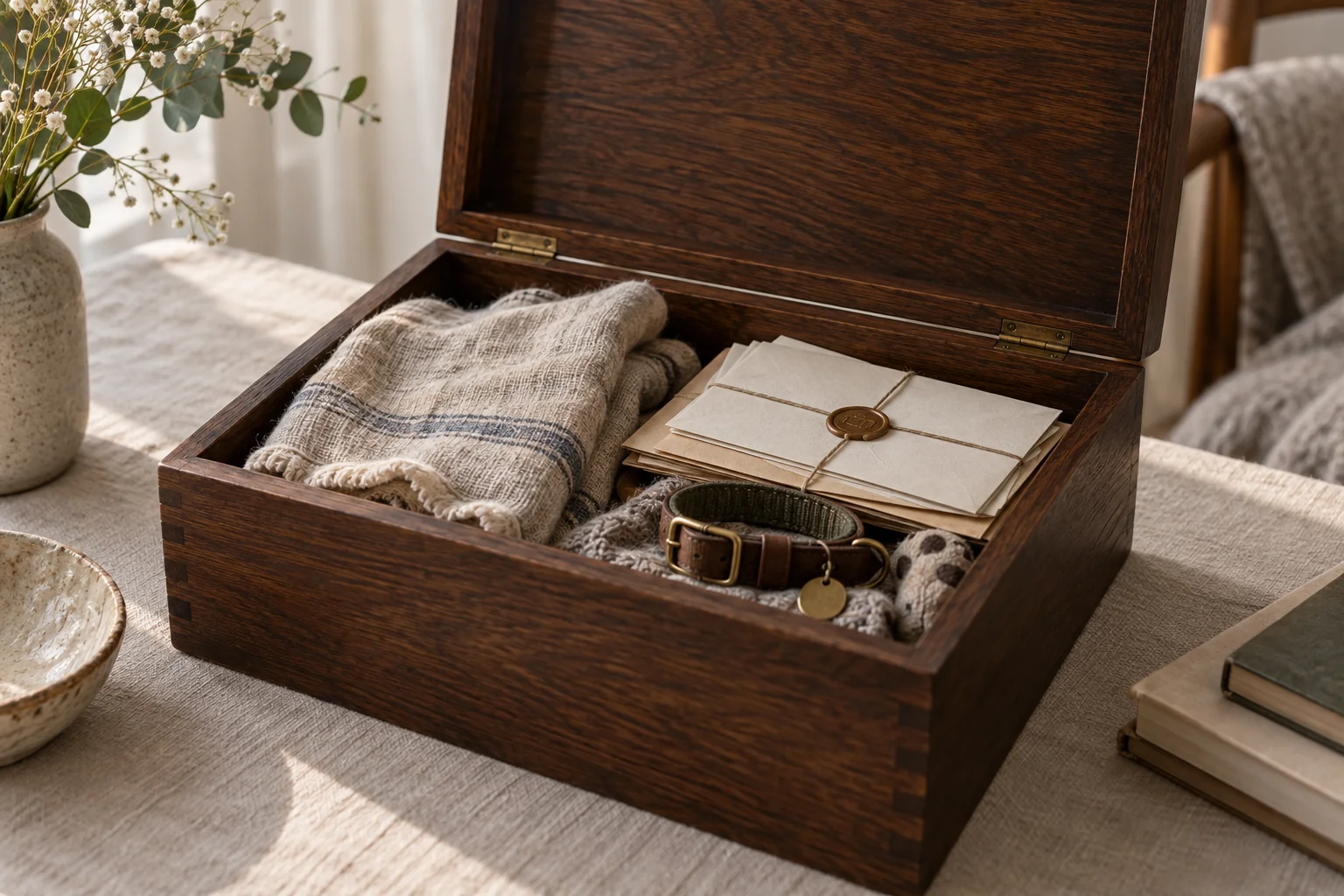
When a family pet dies, practical arrangements and personal questions arrive together. Children need to understand what has changed, while adults need to agree how they will explain it and which decisions remain their responsibility. The conversation should not begin with purchasing an urn or organising an elaborate ritual. Start with a clear explanation of the loss itself.
Use words that explain what happened
Child Bereavement UK recommends clear explanations of death rather than confusing expressions such as describing someone as lost. When talking about a pet, saying only that it went away can also leave the central fact unexplained. A brief, direct explanation provides a basis for questions instead of making the child guess where the animal is.
Adults can agree the essential facts and vocabulary beforehand. One relative saying the pet died while another promises it will return creates contradictory explanations. Religious or personal beliefs can be discussed, but they should not replace a straightforward answer about what happened or introduce promises the family cannot fulfil.
Keep service decisions with the adults
Choosing cremation arrangements, handling documents and approving costs are not responsibilities to transfer to a child. Adults can explain an agreed plan without asking the child to choose between arrangements whose consequences are unclear. Being invited to take part should not mean being asked to decide what the entire family will do with the ashes.
Before proposing a remembrance activity, explain the specific action. The family might select several photographs or add the pet’s name to an album. A defined choice is easier to discuss than asking the child to organise a complete farewell. Participation should include the option not to take part.
A memory does not require a new purchase
Choose a favourite picture, write one short story or preserve a drawing. Agree whether it will be kept in a shared album or whether the child can have a separate copy. A small activity can be completed in one sitting; it does not need to become a project with a compulsory finished result.
There is no need to present every belonging as an immediate decision. Adults can put the pet’s items aside and return to the discussion later. If one object is retained, explain where it will be kept and what the family intends to do with it. That makes the agreement practical rather than leaving a collection of unclear expectations.
Make the remembrance place safe and understandable
If an urn will be kept at home, adults choose a stable location and remain responsible for its handling. Explain its purpose without inviting the child to open or move it. A photograph or drawing may stand nearby, but surrounding objects should not obstruct safe access or disguise an unstable support.
Keep small loose components and open flames away from places accessible to young children. If a shared evening of memories is planned, discuss its duration and activities beforehand. Family members do not all need to speak, draw or remember in the same way simply because they are taking part together.
Leave room for another conversation
One conversation does not have to resolve every future question. Agree which trusted adult the child can approach when something else arises. If individual support is needed, consult a professional who can understand the child’s circumstances rather than trying to diagnose a need from one reaction or moment.
The memory-box guide covers practical storage of personal objects. An album, drawing and urn are not a compulsory set. Choose what the family actually wants to retain, rather than arranging a scene for a photograph or following a farewell script that does not suit the people involved.