 EN
EN LT
LT DE
DE PL
PL DA
DA SV
SV NB
NB FI
FI IS
IS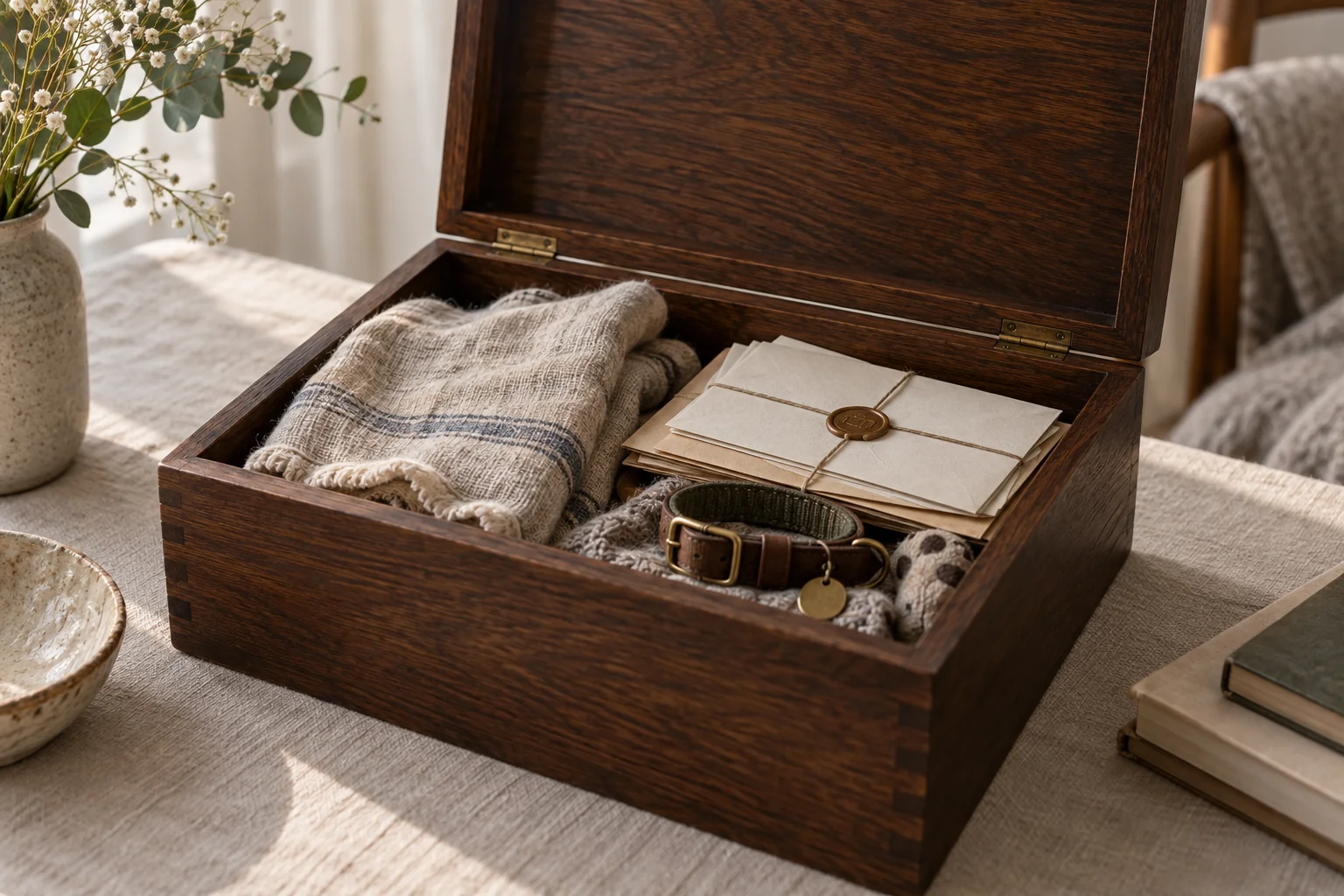
A memory box can hold things that do not belong on an open shelf: letters, photographs, small personal objects or a pet’s collar. Its purpose is to keep a chosen collection together with the stories that explain it. Select the box and internal arrangement around the contents rather than trying to force every object into a container bought before the selection was made.
Choose for personal significance
Lay the possible objects on a clean surface and consider them individually. What does each one recall? Could its story be written briefly? An ordinary object used every day can matter more than something valuable with little personal connection. There is no standard list that every family must reproduce.
The decision can happen in stages. Begin by separating objects you definitely want to retain from those that need more thought. You do not need to settle an entire collection of belongings in one sitting. A memory box is also not expected to contain everything that remains in the family. It can represent one person, period or shared activity.
Arrange different materials carefully
Separate objects into suitable compartments or sleeves. A metal fitting should not press against a photograph, and a textile should not be crushed beneath a heavy object. This arrangement reduces the chance of mechanical damage and makes an item accessible without disturbing everything else. Test the arrangement before deciding the final internal layout.
Do not put damp or dirty objects beside paper. If an item needs cleaning or conservation, establish the appropriate method first. Polishing, gluing or aggressively cleaning an old object merely to prepare it for the box may be unnecessary. Signs of use can be part of the reason it was kept. An object that needs specialist care can be stored separately and represented in the box by a photograph.
Give each object its context
A short card can state whose object it was, when it was used and why it was retained. The colour of a collar cannot tell a later viewer where the family walked with that pet. A specific recollection gives the object a context that other relatives can understand, even if they were not present at the time.
Do not invent dates to complete the record. Use an approximate period or identify the person who told the story. If a photograph accompanies the object, explain the relationship between them. This creates a coherent collection rather than a box of items whose meanings gradually become unclear.
Select the box after measuring
Measure the largest objects and consider the total weight. The lid should close without pressing on the contents. If the collection will be opened often, choose a construction that can be handled comfortably. Its appearance should support its purpose rather than make access awkward. Leave enough space to lift delicate items out safely.
The storage location matters as well. Avoid places where the box may become damp, overheat or be compressed beneath other belongings. For material sensitive to light or repeated handling, a viewing copy can be useful. Identify originals and copies in the collection record so that they are not confused later.
Make the collection understandable
Add a simple contents list. It makes it easier to notice when an object has been left elsewhere after a viewing. If several people use the box, agree where it stays and how objects are returned. A personal box can remain private while selected stories are included in a shared family album.
The collection can grow, but each addition should have a clear place and description. Its value comes from recognisable objects and the specific stories attached to them. Decorative symbols are optional. Keeping the arrangement simple leaves attention on the actual belongings and makes the box easier for the family to revisit over time.