 EN
EN LT
LT DE
DE PL
PL DA
DA SV
SV NB
NB FI
FI IS
IS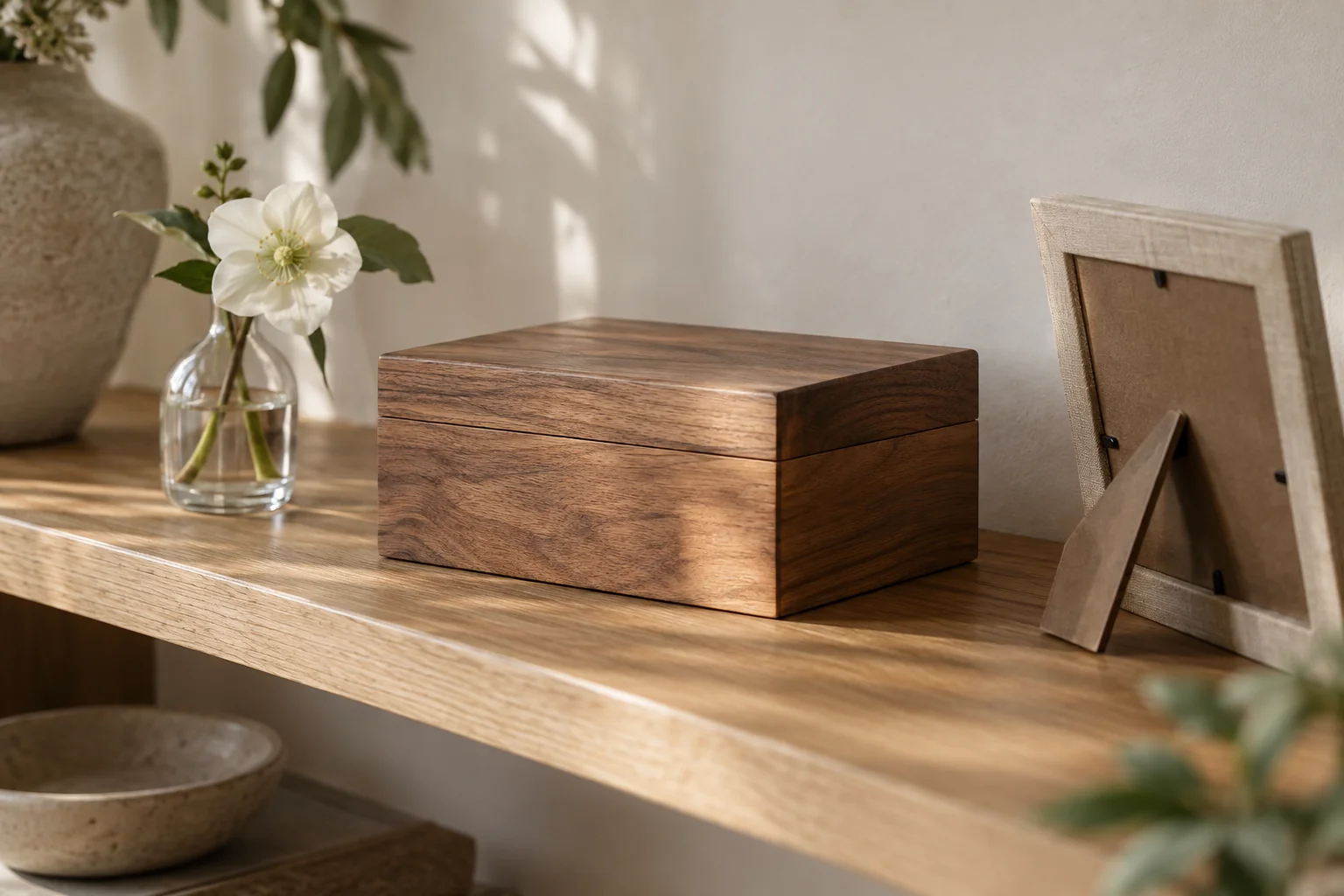
A memorial space at home does not require a separate room or specially made furniture. A secure shelf, small cabinet or quiet part of a study can provide enough space. A considered location makes the objects accessible and easy to care for while fitting the way the home is actually used. Its value comes from the chosen objects and the people who live with them.
Look at everyday movement
Consider how the room works. Do people pass close to the surface? Does a door open beside it? Can children or pets reach it? An urn near the edge of a walkway or on furniture that moves frequently can be inconvenient, even when the arrangement looks balanced in a photograph. Observe the room at busy times, not only when it is quiet.
The supporting surface should remain stable during cleaning and ordinary use of nearby furniture. For a wall shelf, check its fixing and load capacity against the combined weight of everything displayed. Leave room around the urn to grip it safely. A surface that exactly matches the base footprint may provide too little space for handling.
Choose what to display
One carefully chosen object can be more effective than a large group of unrelated decorations. A photograph, personal item or short note can sit beside the urn. There is no compulsory set of objects and no need to reproduce a display seen elsewhere. Each item should have a reason to occupy that particular place.
Other keepsakes can remain in a memory box or album. This keeps the open surface manageable and makes cleaning easier. Photographs from different periods can be changed rather than displayed all at once. The arrangement can evolve with the family’s preferences instead of becoming a fixed installation that nobody feels able to touch.
Consider light and heat
Observe the light at different times of day. Prolonged direct sunlight can be unsuitable for photographs, paper and some finishes. A heater beneath or beside the shelf changes the conditions too. Choose the location according to the care requirements of the actual objects, rather than assume that everything on the surface responds in the same way.
Keep open flames away from the urn, paper and textiles. If a light is wanted, a safely installed electric lamp can provide it. Route cables so that they do not obstruct access or pull other objects from the shelf. Ordinary room lighting may be sufficient; a memorial space does not require theatrical illumination to remain meaningful.
Select the photograph for its content
Choose a picture for what it records rather than how closely its colours match the room. A recognisable expression, familiar activity or shared occasion may matter more than a technically perfect portrait. Displaying a copy allows the original to be stored away from daily handling and exposure.
A brief written note can preserve a name, date or the circumstances of the image. It does not need to become a long inscription. More detail can stay in an album or digital archive. Recording the basic context helps someone who did not share the moment understand why the object was kept.
Agree the location together
Discuss whether the space should be openly visible or more private. One person may want the urn in view every day, while another feels more comfortable with a quieter location. In a shared home, both preferences deserve attention. A temporary arrangement can be useful while the family learns how the space feels in ordinary use.
Review the placement when furniture, household routines or living arrangements change. Moving an object does not erase its significance. Stability, clear purpose and consideration for the people using the home provide a stronger basis than a rigid decorating rule. Keep the objects accessible enough that the chosen space remains part of living at home rather than an area that becomes difficult to maintain.